


In this article, we'll take a high-level look at the types of treatments available for patients suffering from disc herniations. The headline is this: many patients do not need surgery. There are many conservative (meaning less invasive) ways to treat herniated discs that often work wonderfully. So let’s take a look starting with the least invasive options.
1. Controlled Rest and Activity Modifications
When a herniated disc flares up, every instinct tells you to lie down and wait it out. It's an understandable response — but prolonged bed rest is one of the most outdated approaches in spine care. Research has shown that extended bed rest offers no benefit over staying active and can actually delay recovery by weakening the muscles that support your spine.
What works better is what clinicians call "active rest”—a deliberate approach where you reduce high-intensity activity but continue to move gently and purposefully within your comfort level. Think short walks, light stretching, or simply going about your daily routine at a slower pace. The goal is to keep circulation flowing to the disc and prevent the stiffness and muscle loss that come with inactivity.
A key concept your care team at DISC will help you understand is the difference between movements that "centralize" your pain and those that "peripheralize" it. Centralization means your symptoms move back toward the spine, which is a sign of healing. Peripheralization means symptoms are spreading further outward, a signal to stop and reassess. Learning to read these signals is a surprisingly empowering part of early recovery.
Finally, small changes to your daily environment can make a meaningful difference. If you work at a desk, a chair with proper lumbar support or a standing desk that lets you alternate between sitting and standing can significantly reduce pressure on your injured disc throughout the day.
2. Specialized Physical Therapy (PT)
Specialized physical therapy gives you a structured, research-backed way to calm your symptoms and protect your spine over the long term. At DISC, your care team often partners with therapists who use the McKenzie Method (also called Mechanical Diagnosis and Therapy), a proven system that uses repeated, targeted movements to “centralize” pain back toward the spine and away from the arm or leg.
Your therapist will also guide you through gentle techniques that help decompress the spine and reduce nerve irritation, e.g., specific extension-based movements, traction-style positions, or carefully selected stretches that open space around the affected nerve root. The goal is not random exercise, but the right movements in the right direction, based on how your symptoms respond.
Over time, PT focuses on building what many clinicians call an “internal corset”: the deep core muscles (like the transverse abdominis and multifidus) that act as built‑in support for your spine. When these muscles are strong and well-coordinated, they help offload the injured disc, improve posture, and significantly lower the risk of future flare‑ups.
3. Core Stabilization & Therapeutic Exercise
Once your acute pain is under better control, the focus shifts to stability. As mentioned above, targeted core work trains deep muscles such as the transverse abdominis and multifidus (your body’s “internal brace”) to support each spinal segment and reduce strain on the injured disc. Over time, this kind of training has been shown to ease pain and lower the risk of future flare‑ups.
Low‑impact aerobic exercise, like swimming or recumbent cycling, adds another layer of benefit. These activities keep pressure on the spine relatively low while increasing circulation, which helps deliver nutrients to the discs and surrounding tissues.
Finally, your care team will work with you on postural retraining. How you sit, stand, lift, and move throughout the day all contribute to your postural health. Good posture and body mechanics reduce excessive disc pressure and are key to avoiding a future re‑herniation once you’re feeling better.
4. Medication Management
Medications can take the edge off pain while your body and therapies do the real healing work. Non-steroidal anti-inflammatory drugs (NSAIDs) like ibuprofen or naproxen are often used first to reduce inflammation around the irritated nerve and break the “pain–spasm” cycle.
For severe, acute flare‑ups with significant nerve irritation, a short oral steroid taper may be prescribed. This can modestly improve function for some patients by calming inflammation, though it does not typically erase pain and is used selectively because of potential side effects.
When pain shoots down an arm or leg, neuropathic agents such as gabapentin or pregabalin may be added to help quiet overactive nerve signals. These medications don’t fix the disc itself, but they can make radiating pain more manageable while other treatments take effect.
Opioid medications are generally avoided for herniated disc pain and reserved only for short-term use in the severest of cases. Opioids benefits are limited and the risks (dependence, side effects) are significant. If they are used at all, it is typically at the lowest effective dose, for just a few days, and as part of a broader plan that emphasizes non-opioid medications and active rehabilitation.
5. Epidural Steroid Injections (ESI)
For patients with persistent, significant nerve pain from a herniated disc, epidural steroid injections (ESIs) can provide targeted relief. During this procedure, a specialist uses live X‑ray or other imaging to guide a thin needle into the epidural space and deliver corticosteroid medication precisely where the inflamed nerve root lives.
By reducing inflammation and swelling around the nerve, an ESI can “open a window” where pain is calmer and patients can participate more fully in physical therapy and rehabilitation. The relief may last weeks to months and, in some cases, can delay or even avoid surgery, though injections are usually limited to a few per year.
There are several approaches to placing the medication. Interlaminar injections are delivered from the back of the spine into the central epidural space, transforaminal injections target a specific nerve root from the side, and caudal injections enter through the tailbone and bathe a broader area, often used when anatomy or prior surgery makes other routes difficult.
6. Minimally Invasive Microdiscectomy
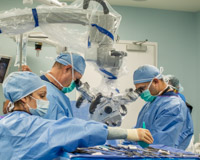
When conservative care and injections are not enough, minimally invasive microdiscectomy is often considered the surgical gold standard for relieving nerve compression from a herniated disc. In this procedure, the surgeon works through a small incision using high-powered magnification to gently move the nerve aside and remove only the herniated fragment of disc that is pressing on it, leaving the rest of the disc and surrounding structures intact.
Because the approach is muscle-sparing and tissue disruption is limited, most patients go home the same day and experience rapid relief of leg or arm pain, with a relatively quick return to light activities as they heal. At DISC’s outpatient centers, this kind of advanced technique is combined with precise imaging, anesthesia, and rehabilitation planning to maximize safety and speed of recovery.
7. Artificial Disc Replacement (ADR)
Artificial disc replacement is a motion-preserving surgery, used most often in the cervical spine, in which the surgeon removes the damaged disc and implants a specialized artificial disc in its place. The prosthetic is designed to move more like a healthy, natural disc, allowing flexion, extension, and rotation at that level so the spine bends and turns more normally.
By preserving this motion, ADR helps maintain more natural biomechanics, which may reduce extra stress on nearby levels and lower the long-term risk of adjacent segment problems in well-selected, typically active patients.
8. Spinal Fusion
Spinal fusion is typically reserved for situations where there is true instability, significant deformity, or ongoing pain that cannot be controlled with motion-preserving options like microdiscectomy or disc replacement. In this procedure, two or more vertebrae are joined together with bone graft and hardware so they heal into a single solid unit, eliminating painful motion at that level and providing long-term stability.
Modern instrumentation including screws, rods, and interbody cages helps maintain alignment and stability while the bone fuses, which has greatly improved success rates and structural integrity over the past few decades. At DISC, fusion is carefully considered, planned with advanced imaging, and used only when it offers a clear benefit over less invasive options or ADR.
Determining the Right Intervention
For most patients without red-flag symptoms, spine specialists recommend a trial of conservative care — typically about 4 to 6 weeks of measures like activity modification, physical therapy, and medications — before considering procedures such as injections or surgery. This window allows time for inflammation to settle and for the natural healing process to work; many herniated discs improve significantly during this period.
However, certain neurological signs change the conversation. Worsening numbness, significant weakness, or problems like foot drop (difficulty lifting the front of the foot) can indicate more serious nerve compression that may require earlier imaging and, in some cases, urgent surgical evaluation. Loss of bowel or bladder control or saddle anesthesia (numbness in the groin area) are emergency signs that should prompt immediate medical attention, not watchful waiting.
Get An Expert Opinion
At DISC, you don’t have to decide on your own which of these options is “right” for you. Our spine specialists take the time to understand your symptoms, review your imaging, and walk you step by step from conservative care through advanced interventions only if and when you truly need them.
If you’re living with a herniated disc and wondering what comes next, the best place to start is a focused consultation with an expert team that can see the whole picture and coordinate every part of your care. To explore your options and build a personalized plan, we invite you to schedule an appointment with DISC so you can move forward with clarity, confidence, and a clear path back to life in motion.
About the author
discmdgroup DISC Sports & Spine Center (DISC) is a national leader in minimally invasive spine surgery, orthopedic surgery, and sports medicine care. Our spine surgeons set the standard in artificial disc replacement, spine fusion, discectomy, microdiscectomy and the full spectrum of spine procedures. The group’s orthopedic surgeons advance the state of joint preservation surgery and total joint replacement, including total knee replacement as well as total hip replacement. Our flagship surgery centers based in Newport Beach, Marina del Rey, and Carlsbad serve patients local to Los Angeles, Orange County and San Diego, as well as the rest of the country. Read more articles by discmdgroup.