

Expert diagnosis and personalized treatment plans to relieve leg, hip, and lower back pain caused by sciatica.


Sciatica refers to a pattern of nerve pain caused by irritation or compression of the sciatic nerve, the largest nerve in the body. Rather than being a diagnosis itself, sciatica is a symptom that points to an underlying problem in the lumbar spine or surrounding structures.
Sciatic nerve pain most often begins in the lower back or buttock and radiates down one leg. The severity and character of symptoms vary depending on how the nerve is affected. Some people experience intermittent discomfort, while others develop persistent pain that interferes with daily activity, sleep, and mobility.
Because sciatica is a symptom rather than a condition on its own, effective treatment depends on identifying what is actually irritating the nerve.

.jpg?width=1600&height=1067&name=What%20is%20Sciatica%20(1).jpg)
Board-certified spine specialists
Minimally invasive focus
Outpatient-first model
Multiple Southern California locations & WPB
.jpg?width=1600&height=1067&name=Common%20Causes%20of%20Sciatica%20(1).jpg)
Sciatica occurs when a nerve root in the lumbar spine becomes irritated, inflamed, or compressed. The underlying cause matters, because treatment should address the source of nerve irritation rather than simply masking pain.
Herniated or bulging discs in the lower spine
Lumbar spinal stenosis that narrows nerve pathways
Degenerative disc disease
Spondylolisthesis or spinal instability
Bone spurs or joint degeneration
Recurrent nerve compression after prior spine injury or treatment
Identifying the specific cause helps guide appropriate care and avoid unnecessary or ineffective treatment.
.jpg?width=1600&height=1067&name=Common%20Causes%20of%20Sciatica%20Include%20(1).jpg)
.jpg?width=1600&height=1067&name=Signs%20It%E2%80%99s%20Time%20to%20See%20a%20Specialist%20(1).jpg)
Some mild sciatica symptoms improve over time, but ongoing or worsening nerve pain should be evaluated by a spine specialist to prevent prolonged discomfort and potential nerve damage.
Our process starts with a comprehensive consultation and advanced imaging to accurately identify the source of your pain.




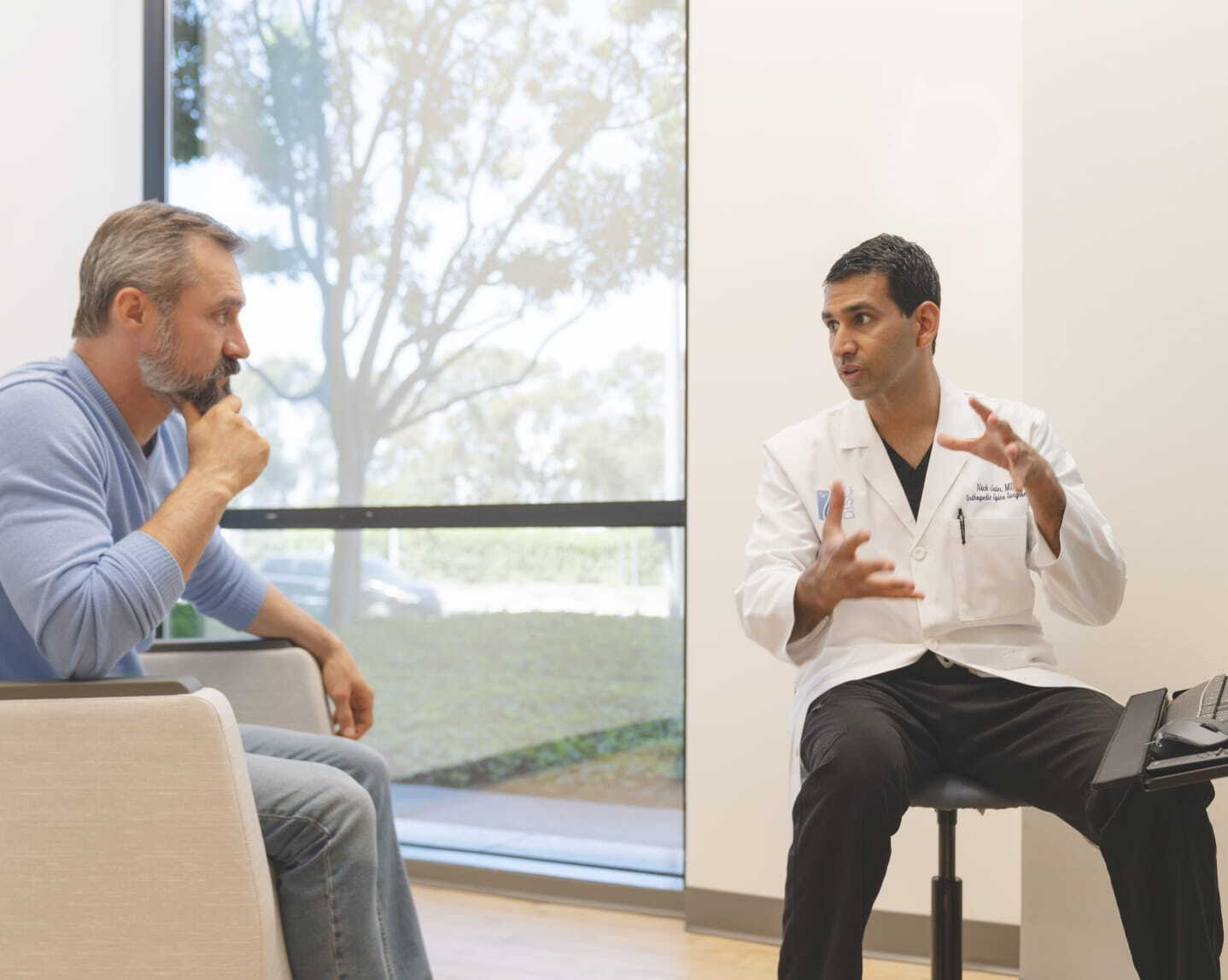
At DISC, diagnosing sciatica involves more than reviewing imaging alone. Many spine changes are common on MRI and do not always cause symptoms, which makes careful clinical correlation essential.
Diagnosis typically includes a detailed symptom history, physical and neurologic examination, and movement assessment. Advanced imaging such as MRI, CT scans, or X-rays may be used when appropriate to visualize discs, joints, and nerve structures.
.jpg?width=1600&height=1067&name=What%20the%20evaluation%20typically%20includes%20(1).jpg)
Comprehensive spine-focused clinical exam
Neurologic testing for strength, sensation, and reflexes
Degenerative disc disease
Imaging review or imaging ordered when needed
Correlation of findings to identify the true pain generator
A clear explanation of diagnosis and next steps
Most sciatica cases improve without surgery when treatment is properly targeted. Non-surgical care focuses on reducing nerve irritation, restoring movement, and preventing recurrence.

Our process starts with a comprehensive consultation and advanced imaging to accurately identify the source of your pain.




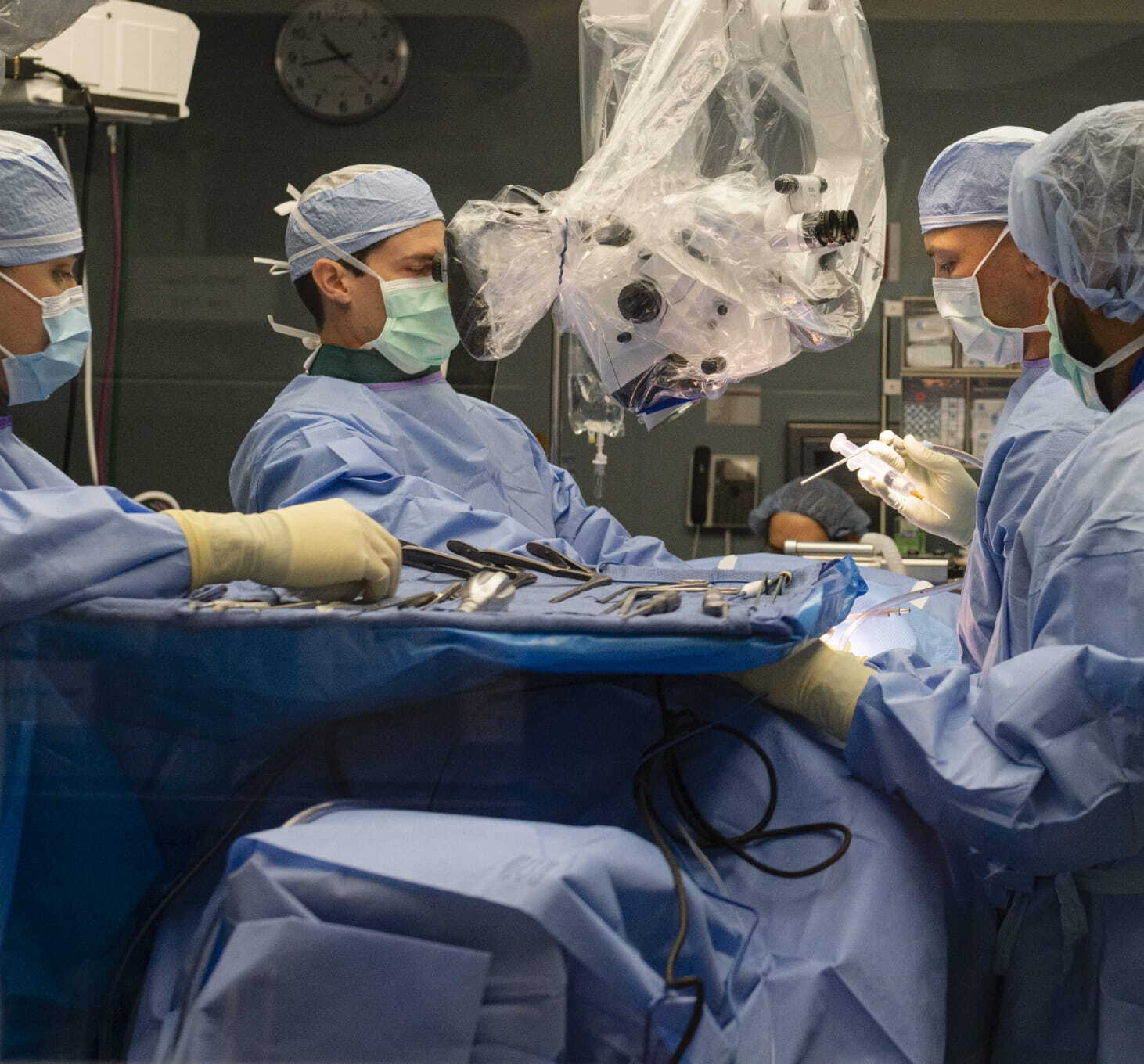
Advanced treatment may be discussed if sciatica persists, worsens, or causes neurologic symptoms despite appropriate conservative care. When needed, treatment is focused on relieving nerve compression while preserving spinal motion whenever possible.
Minimally invasive techniques and outpatient procedures are emphasized to support faster recovery and minimize disruption to daily life.
Patients come to DISC for sciatica care because treatment is built around precision and coordination. Rather than addressing leg pain in isolation, DISC evaluates how the spine, nerves, and surrounding structures interact, allowing sciatica to be treated at its true source instead of through trial-and-error approaches.
Care is designed to move patients forward efficiently. Non-surgical options are prioritized when appropriate, with clear decision-making around next steps if symptoms persist. When advanced treatment is required, DISC’s outpatient model allows patients to receive specialized spine care with a focus on safety, recovery, and long-term outcomes.
Comprehensive spine-focused clinical exam
Neurologic testing for strength, sensation, and reflexes
Degenerative disc disease
Imaging review or imaging ordered when needed
Correlation of findings to identify the true pain generator
A clear explanation of diagnosis and next steps